Tuesday, April 2, 2024

Asaf Ali's Death Anniversary


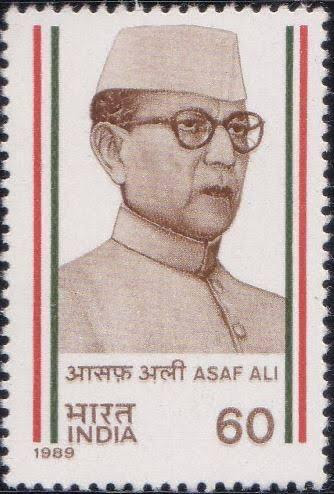
Asaf Ali, who passed away on 2 April 1953, aged 64, was an Indian independence activist and noted lawyer. He was the first Indian Ambassador to the United States.  He was appointed governor of Odisha for two terms and later, Indian Ambassador to Switzerland.

Narottam Morarjee's Birth Anniversary


Narottam Morarjee, born on 2 April 1877, in Porbandar, was an Indian businessperson with major interests in shipping and textiles.

His father Seth Morarjee Goculdas was a pioneering textile magnate. He studied at Elphinstone College. He started managing two mills- Morarjee Goculdas Mill of Bombay and Solapur Mill of Solapur while studying.

Narottam Morarjee later came into close contact with Mahatma Gandhi, Dr, Annie Besant, Dadabhai Naoroji, Rabindranath Tagore, Sarojini Naidu and Motilal Nehru.

Narottam Morarjee joined hands with other Gujarati businessmen, Walchand Hirachand and Kilachand Devchand to finance and establish The Scindia Steam Navigation Company Ltd., which was founded on 27 March 1919. On 5 April 1919, Scindia's first ship s.s. LOYALTY sailed from Bombay to the United Kingdom and unfurled the flag of Indian shipping in international waters.

Narottam Morarjee died on 5 November 1929.

Ustad Bade Ghulam Ali Khan's Birth Anniversary


Ustad Bade Ghulam Ali Khan, born on 2 April 1902, in Kasur, of the erstwhile Punjab Province, British India, was an Indian vocalist, from the Kasur-Patialia Gharana and hailed from a family of musicians. Following partition of India in 1947, Kasur Tehsil was allocated to Pakistan.

He received his early training in vocals from his uncle Kale Khan — who had been a court singer in the princely state of Jammu and Kashmir. He also familiarised himself with the sarangi. Subsequently, he was trained by his father Ali Baksh Khan.

His musical might first became evident when he found an audience for his “all-night riyaaz” in Kasur. His brothers Ustad Mubarak Ali Khan, Ustad Bharat Ali Khan and Ustad Amanat Ali Khan were also well-known contributors to the Kasur-Patiala gharana.

The most common epithet used to describe Ustad Ghulam Ali Khan is ‘Tansen of the 20th century’. Often referred to as Bade (older) Ghulam Ali Khan to differentiate him from other maestros of the same name, the genius musician was one of the most legendary thumri vocalists of all time, who took the Patiala Gharana, one of the schools of Hindustani classical music, to new heights.

Born in undivided Punjab, Bade Ghulam Ali Khan found his home in India many years after Partition — he lived in Mumbai, Kolkata and Hyderabad, where he eventually passed away.

Pope John Paul II Death Anniversary


St. John Paul II, passed away on 2 April, 2005, Vatican City, aged 84. He was beatified on 1 May 2011; canonized 27 April 27 2014; and has his feast day on 22 October, a date chosen to remember the anniversary of the liturgical inauguration of his Papacy in 1978.

Of Polish nationality, and born, Karol Józef Wojtyła, he was the third longest serving pope and the first non-Italian for 455 years he held office from 1978 to his death in 2005. As part of his effort to promote greater understanding between nations and between religions, he undertook numerous trips abroad, traveling far greater distances than had all other popes combined, and he extended his influence beyond the church by campaigning against political oppression and criticizing the materialism of the West. He also issued several unprecedented apologies to groups that historically had been wronged by Catholics, most notably Jews and Muslims. His unabashed Polish nationalism and his emphasis on nonviolent political activism aided the Solidarity movement in communist Poland in the 1980s and ultimately contributed to the peaceful dissolution of the Soviet Union in 1991. More generally, John Paul used his influence among Catholics and throughout the world to advance the recognition of human dignity and to deter the use of violence. His centralized style of church governance, however, dismayed some members of the clergy, who found it autocratic and stifling. He failed to reverse an overall decline in the numbers of priests and nuns, and his traditional interpretations of church teachings on personal and sexual morality alienated some segments of the laity.

Samuel Morse's Death Anniversary


Samuel F.B. Morse, who passed away on 2 April 1872, New York, aged 80, was an American painter and inventor who is best remembered today for his invention of single-wire telegraph system and the co-inventor of the Morse code - method of transmitting textual information as a series of on and off tones. His discovery soon changed the way the messages are sent and received in the entire world, and even today Morse code is still in use in various areas of radio communications. Although he was considered to be poor during the majority of his life, he managed to live as an accomplished painter until he focused his interests on electromagnetism and electric communication.

Ranjitsinhji's Death Anniversary


Sir Ranjitsinhji Vibhaji, Maharaja Jam Sahib of Nawanagar, who passed away on 2 April 1933, Jamnagar, aged 60, was one of the world’s greatest cricket players and, later, a ruler of his native state in India.

After attending Trinity College, Cambridge (1890–93), he played for the Sussex cricket team in first-class county competition (1895–97, 1899–1904, 1908, 1912) and served as team captain (1899–1903). An unorthodox but graceful batsman, he scored the high total of 3,000 runs in 1899 and again in 1900. In 15 England-versus-Australia test matches, he scored 985 runs.

As maharaja of Nawanagar from March 1907, he was a progressive ruler and statesman and set an example by the simplicity of his personal life. He modernized his capital of Jamnagar, developed the seaport of Nawanagar, and built roads, railways, and irrigation facilities. During World War I he was a British army staff officer in France, attaining the rank of colonel. In 1920 he represented the Indian states at the League of Nations Assembly, Geneva, and in 1932 he became chancellor of the Indian Chamber of Princes. He was knighted in 1917, 1919, and 1923.
Tristão de Bragança Cunha's Birth Anniversary


Tristão de Bragança Cunha, alternatively spelled as Tristao de Braganza Cunha, born on 2 April 1891, in Chandor village, Goa, was a prominent Indian nationalist and anti-colonial activist from Goa (then part of Portuguese India). He is popularly known as the ‘Father of Goan nationalism’ and was the organizer of the first independence movement to liberate Goa from Portuguese rule.

He completed his school education in Panaji and then went to Pondicherry to the French College for pursuing B.A. and thereafter he went to Paris. There he studied at Sorbonne University and obtained a degree in electrical engineering. In Paris, Cunha entered the circle of Romain Rolland and helped publicize the Indian independence Movement generally, and the case of Portuguese India in particular, in the French-language press. Cunha returned to Goa in the year 1926 and set up the Comissão do Congresso de Goa (Goa Congress Committee) in 1928 to organize the Goan intelligentsia against Portuguese colonial rule. Pressured by Portuguese authorities, Cunha transferred operations to Bombay and in 1938, affiliated his organization with the Indian National Congress. He continued publicizing the Goan case in a stream of articles and books, denouncing Portuguese rule. Among his publications were booklets such as ‘Four Hundred Years of Foreign Rule’ and ‘The Denationalization of Goans’ (1944). Cunha was an advocate of Goan identification, political as well as cultural, with greater India. In 1946, Cunha helped organize the famous assembly in Margão, inviting Dr. Ram Manohar Lohia to address what was arguably the first and largest mass gathering, setting the Goa Liberation Movement in motion. Along with other organizers, Cunha was arrested by Portuguese authorities in 1946. He was kept in a dark damp cell at Fort Aguada. He was the first civilian to be tried by a military tribunal. He was court-martialed and sentenced to eight years imprisonment. He was deported to Peniche prison in Portugal.  After his release from Portugal in 1954, Cunha returned to Bombay. Cunha formed and headed the Goa Action Committee, to help coordinate the numerous Goan liberation organizations that had emerged by this time. He published a newspaper called ‘Free Goa’. Tristao de Braganza Cunha died on 28 September 1958; Loknayak Jaiprakash Narayan was one of the pallbearers. The Government of India issued a postage stamp in his honour. At the time of his death, in a condolence resolution, the Indian National Congress described him as ‘The Father of Goa Liberation Movement’. On that Occasion Pt. Jawaharlal Nehru said, “what is worth remembering is that a small territory has produced a relatively large number of men and women who have sacrificed much for the struggle. Among them, the name that stands out is that of Dr. T. B. Cunha”.

Sir Garfield Sobers' Birth Anniversary

  Sir Garfield St Auburn Sobers, born on 28 July 1936, in Bridgetown, Barbados, was widely considered the greatest all-rounder in cricket ...