Thursday, April 25, 2024

World Penguin Day


World Penguin Day is celebrated every year on 25 April. This day is significant because it coincides with the start of the northern migration of Adelie penguins. Adelie penguins are one of the 17-20 species of penguins recognized worldwide. The southern hemisphere is home to most of the penguins, with a total of about 20 species known to humans.

The Emperor Penguin is the largest species of penguins. whereas the smallest are found along the coastal areas of New Zealand and Australia. Penguins are flightless birds, and their habitats are found in the southern hemisphere. One of the most popular and intriguing characteristics of penguins is that of them waddling with their group in icy lands. This has made them a popular subject for animated movies and cartoons.

History of World Penguin Day

World Penguin Day is celebrated on annually on 25 April. This day was established at McMurdo Station, an American research center situated on Ross Island. World Penguin Day is dedicated to Adélie Penguin, a species of penguins who start their migration north toward Antarctica around 25 April every year. This migration takes place so that the penguins can have access to food during the winter months. Researchers were quite intrigued by this fact, and therefore decided to celebrate World Penguin Day on 25 April to mark the occasion and raise awareness of these amazing and beautiful creatures.

Significance of World Penguin Day

The significance of World Penguin Day extends to highlighting the plight of endangered species. While the day was initially established to commemorate the Adélie Penguin's migration patterns, it now encompasses all species of penguins and emphasizes their vulnerability to extinction. According to the International Union for Conservation of Nature (IUCN), 10 of the 17 species of penguin currently exist are endangered or threatened with extinction.

Penguins are highly social animals that spend up to three-quarters of their lives in the sea. They rely on the oceans for food. Overfishing and pollution are the major threats to their survival. Climate change is also a major concern for penguin species. As sea ice shrinks, it not only affects their habitat but also impinges on their chick hatching times and food availability. World Penguin Day provides an opportunity to appreciate these unique animals and take a stand against the threats they face. It is also a reminder of the importance of protecting the ocean and the environment for future generations.

World Penguin Day: Unknown Facts About Penguins

Following are some of the unique and unknown facts about Penguins that everyone must know.

  • The Emperor Penguin is one of 17 species of penguin that live in the waters of Antarctica. It is the largest of these species, reaching an average size of 1m tall, weighing approximately 35kg.
  • Instead of wings, penguins use their flippers for swimming, and they can drink salty sea water for up to 20 minutes without coming up for air.
  • Majority of the penguins are monogamous except Emperor Penguins who are serially monogamous, meaning they have same partner for a season rather than life.
  • Penguins have a sharp eyesight, which allows them to see clearly in and out of water. Like humans, penguins also have a binocular vision, meaning they can focus on a single object with both the eyes.
  • The black and white colored body of penguins is a camouflage. The black markings protect them from the predators outside the water while as the white markings make them almost invisible inside the water.
  • Penguins are carnivores, and eat small fishes and shrimps while swimming.
  • Little Blue Penguin, also known as the Fairy Penguin is the smallest penguin. It weighs only 1 kg and is around 33 cm tall.
  • Different species of penguins have different life spans, which may vary from 6 to 30 years.
  • Out of 17-20 species of penguin, 10 species have been declared as vulnerable or endangered, and are currently enlisted on the IUCN’s red list.


World Malaria Day


World Malaria Day, annual observance held on April 25 to raise awareness of the global effort to control and ultimately eradicate malaria. World Malaria Day, which was first held in 2008, developed from Africa Malaria Day, an event that had been observed since 2001 by African governments. The observance served as a time to assess progress toward goals aimed at controlling malaria and reducing its mortality in African countries. In 2007, at the 60th session of the World Health Assembly (a meeting sponsored by the World Health Organization [WHO]), it was proposed that Africa Malaria Day be changed to World Malaria Day to recognize the existence of malaria in countries worldwide and to bring greater awareness to the global fight against the disease.

Malaria exists in more than 100 countries worldwide, and some 900,000 people die from the disease each year. However, malaria is preventable with the use of medicines and other precautionary measures, such as insecticide -treated bed nets and indoor insecticide spraying. On the first World Malaria Day the secretary-general of the United Nations, Ban Ki-moon, emphasized the need to increase the availability of bed nets, medicines, public health facilities, and trained health workers to people in areas of the world affected by malaria. Ban challenged global initiative programs, such as the Bill & Melinda Gates Foundation, the Roll Back Malaria Partnership, and the Global Fund for AIDS, Tuberculosis, and Malaria, by stating that he expected such universal access to be in place by the end of 2010.

Ban’s call for action prompted the formation of the Global Malaria Action Plan (GMAP), an aggressive unified strategy designed to reduce the incidence of malaria worldwide. The three components of this strategy are control, elimination, and research. Research to develop new drugs and new approaches to prevention is fundamental to efforts aimed at first controlling and then eliminating malaria from areas severely affected by the disease. The long-term goal of the plan was global eradication of the disease by 2015. However, progress toward this goal slowed significantly because of inadequate funding and health care, particularly in difficult-to-reach areas, which had the highest proportion of cases. By 2019, infection rates in places with the greatest malaria burden remain largely unchanged, and an analysis of global trends in malaria incidence suggested that eradication could be achieved by 2050.

In addition to bringing together international agencies and research institutions to discuss the progress of the GMAP, World Malaria Day also provides health organizations and scientists with an opportunity to communicate information about the disease and about current research efforts to the public. This is accomplished through public educational programs, charity events, and other community activities.

Wednesday, April 24, 2024

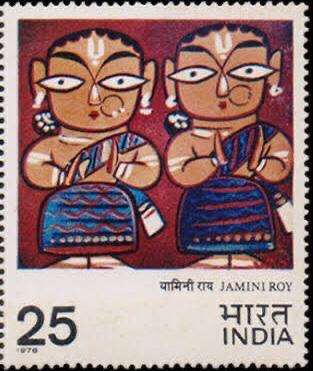
Jamini Roy's Death Anniversary


Jamini Roy, who passed away on 24 April 1972, aged 85, was one of the best-known Indian artists of the 20th century. In the late 1920s and early ’30s he rejected his academic training and instead developed a linear, decorative, colourful style based on Bengali folk traditions. During the 1930s and ’40s the popularity of his paintings represented the passage of modern Indian art from its European academic leanings to a renewed interest in traditional iconography and abstract forms. Roy’s subject matter ranged from the Ramayana to Christ to portraits of contemporary figures such as Mahatma Gandhi.


National Panchayati Raj Day


National Panchayati Raj Day is celebrated on April 24 every year in India to commemorate the historic day when the Panchayati Raj System was introduced in the country. The Panchayati Raj System is a decentralized system of governance in India, where local bodies or Gram Panchayats are given the power to govern themselves and make decisions for the development of their respective areas. This system was introduced in 1993 by the 73rd Constitutional Amendment Act, which aimed at bringing democracy at the grassroots level and empowering people in rural areas.

History

The Panchayati Raj System has its roots in ancient India, where the village council or Panchayat was the primary unit of governance. The system was revived in the early 1950s when the first National Development Council recommended the establishment of a democratic system of governance at the grassroots level. However, it was not until 1993 that the Panchayati Raj System was given a constitutional status and made mandatory for all states in India.

Significance

The Panchayati Raj System has been instrumental in bringing about significant changes in the rural landscape of India. It has given people in rural areas a voice and an opportunity to participate in the decision-making process, leading to the overall development of their respective areas. The system has also helped in decentralizing power and reducing corruption at higher levels of government, as decisions are made at the local level. The system has been successful in bringing about socio-economic development, promoting social justice, and empowering women in rural areas.

International Guide Dog Day


International Guide Dog Day is celebrated on the last Wednesday in April each year, and this year on 24 April.  It marks the establishment of the International Federation of Guide Dog Associations on 26 April 1989. International Guide Dog Day is an opportunity to celebrate the work of guide dogs around the world and raise awareness of the importance of guide dog services to help people who are blind or have low vision live life on their terms.

International Guide Dog Day honours the work that these service dogs provide for people with visual disabilities everywhere. These dogs have skills leading a blind person around an area, assisting with a hobby, picking up dropped items, providing emotional comfort during their service and much more. This is why guide dogs are some of the best service dogs to have.

Sachin Tendulkar's Birthday


Sachin Tendulkar, born on 24 April 1973 in Bombay [Mumbai], is an Indian former international cricket player, considered by many to be one of the greatest batsmen of all time. In 2012 he became the first cricketer to score 100 centuries (100 runs in a single innings) in international play.

Tendulkar was given his first bat when he was 11 years of age. As a 14-year-old, he used it to score 329 out of a world-record stand of 664 in a school match. A year later he scored a century on his first-class debut for Bombay (Mumbai), and at age 16 years 205 days he became India’s youngest Test (international) cricketer, making his debut against Pakistan in Karachi in November 1989. When he was 18, he scored two centuries in Australia (148 in Sydney and 114 in Perth), and in 1994 he scored 179 against the West Indies. In August 1996, at age 23, Tendulkar was made captain of his country’s team.

Although India was defeated in the semifinals of the 1996 World Cup, Tendulkar emerged as the tournament’s top run scorer, with 523 runs. In 1998 he was chosen for the Rajiv Gandhi Khel Ratna Award, the highest award given to an Indian athlete, for his outstanding performance in the 1997–98 season. India was defeated by Australia in the 1999 World Cup, failing to advance past the round of six, and was soundly defeated by both Australia and South Africa in series later that year. In the 2003 World Cup, however, Tendulkar helped his team advance as far as the finals. Though India was again defeated by Australia, Tendulkar, who averaged 60.2, was named the man of the tournament.

Tendulkar made history in December 2005 when he scored his record-breaking 35th century in Test play against Sri Lanka. The feat was accomplished in a total of 125 Tests and allowed Tendulkar to surpass the prolific Indian run scorer Sunil Gavaskar. In June 2007 Tendulkar reached another major milestone when he became the first player to record 15,000 runs in one-day international (ODI) play, and in November 2011 he became the first batsman to score 15,000 runs in Test play. One month later he scored a historic “double century” in a contest against South Africa, becoming the first man in history to record 200 runs in a single innings of ODI play. He was named the 2010 International Cricket Council (ICC) Cricketer of the Year. In an ODI match against Bangladesh in March 2012, Tendulkar scored his record-setting 100th international century—which included both Test (51 centuries) and ODI (49 centuries) play. He retired from ODI cricket later that year, and in 2013 he ended a six-year stint with the Indian Premier League (as a member of the Mumbai Indians) and retired from Test cricket, ending his playing days with records for the most career international runs (34,357) and Test runs (15,921). Throughout his long career Tendulkar was consistently ranked among the game’s best batsmen. He was often likened to Australia’s Don Bradman in his single-minded dedication to scoring runs and the certainty of his strokeplay off both front and back foot.

In 2012 Tendulkar became a member of the Rajya Sabha, the upper chamber of the Indian parliament—the first active athlete to join that body; he was nominated to the post, and his term ended in 2018. In 2014 he became the first sportsman to receive India’s highest civilian honour, the Bharat Ratna. Tendulkar was inducted into the International Cricket Council Hall of Fame in 2019.

Tuesday, April 23, 2024

World Table Tennis Day


World Table Tennis Day (WTTD) has been celebrated annually in April since 2015. It is the day we celebrate table tennis, as well as the universality and social inclusiveness the sport represents. World Table Tennis Day is celebrated on 23 April, honouring Ivor Montagu, organiser of the first World Table Tennis Championships in 1926 and the founder and first president of the ITTF. WTTD celebrates the joy of playing table tennis for fun, bringing people together, focusing less on competition and more on participation and enjoyment.

World Table Tennis Day: History

The history of table tennis dates back to the British military, when officers in India learned to play the game during their time in the country. The game was originally played with a golf ball, and books were used as racquets.

In 1901, James W. Gibb, a British table tennis enthusiast, discovered that the better-suited celluloid balls were more suitable for the game. The modern racquet was invented by E.C. Goode in the same year.

Despite the fact that there are two different bodies associated with table tennis, the Table Tennis Association was established in 1926, separate from the Ping-Pong Association.

The International Table Tennis Federation (I.T.T.F.) was also founded in the same year, and it is now the game's highest governing body. The first World Championship was held in London in 1926, with the United States Table Tennis Association (now known as USA Table Tennis) founded in the same year.

Health Benefits of playing Table Tennis

Beyond its competitive aspect, table tennis offers a multitude of health benefits that contribute to overall well-being. Scientific studies have shown that playing table tennis improves hand-eye coordination, develops mental acuity, enhances cognitive function, improves reflexes, improve your leg, arm and core strength without overtaxing joints, burns calories, helps to lose weight, keeps your brain sharp, improves coordination with others and boosts mental acuity.

Sir Garfield Sobers' Birth Anniversary

  Sir Garfield St Auburn Sobers, born on 28 July 1936, in Bridgetown, Barbados, was widely considered the greatest all-rounder in cricket ...