Wednesday, December 11, 2024

International Mountain Day


To increase awareness of the importance of mountains in preserving the natural balance of the world and the welfare of people, International Mountain Day is celebrated on December 11 every year. 

This day, which was instituted by the UN in 2003, emphasizes the need for protecting mountain ecosystems and sustaining the means of subsistence for mountain populations.

What is the importance of International Mountain Day 2024?

In order to preserve these breathtaking landscapes and guarantee that they continue to offer enormous advantages to present and future generations, International Mountain Day also promotes international collaboration and local action.  

The day is a call to action to save mountains from urgent dangers like deforestation, mining, climate change, and unsustainable tourism. It also emphasizes how significant mountains are to many people around the world on a cultural and spiritual level. Mountains are intricately woven with human heritage, acting as both centres of tradition and sources of livelihood.

Tuesday, December 10, 2024

Portuguese conquest of Goa in 1510


Portuguese naval forces under the command of Afonso de Albuquerque seized Goa from the Bijapur Sultanate, resulting in 451 years of Portuguese rule. Albuquerque attacked Goa at the invitation of a local exiled leader Thimayya. Albuquerque was then able to capture Goa in less than a day, with Bijapur forces surrendered on 10 December 1510.

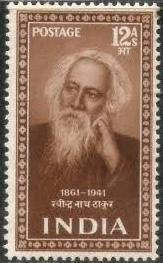
Rabindra Tagore first non-European to win Nobel Prize for Literature in 1913


On 10 December 1913, Bengali poet Rabindranath Tagore became the first non-European to be presented with the Nobel Prize for Literature for "Gitanjali"

Gitanjali, is a collection of poems by the Bengali poet Rabindranath Tagore. Tagore received the Nobel Prize for Literature, largely for the English translation, Song Offering. It is part of the UNESCO Collection of Representative Works. Its central theme is devotion and motto is 'I am here to sing thee songs.’

Ashok Kumar's Death Anniversary


Ashok Kumar, who passed away on 10 December 2001, was an Indian film actor who attained iconic status in Indian cinema. He was honoured in 1988 with the Dadasaheb Phalke Award, the highest national award for cinema artists, by the Government of India and also received the Padma Bhushan in 1999 for his contributions to Indian cinema. He is considered to be one of India's finest actors ever, playing leading, antagonist, and character roles with equal panache. 

Chakravarti Rajagopalachari's Birth Anniversary


Chakravarti Rajagopalachari, born on 10 December 1878, was the last Governor-General of India, as India soon became a Republic in 1950. Furthermore, he was the first Indian-born governor-general, since before him the posts were held by British nationals. Rajagopalachari was also founder of the Swatantra Party — the first political party in India to openly espouse market-friendly economic policies — was born in Thorapalli village in the Madras Presidency. Known as ‘Rajaji’ to friends, family and admirers, he was a writer, politician, lawyer and minister, played an active role in the Indian independence movement, and was close to both Jawaharlal Nehru and Mahatma Gandhi. 

Alfred Nobel's Death Anniversary


Alfred Nobel, who passed away on 10 December 1896, was a Swedish businessman, chemist, engineer, inventor, and philanthropist. He held 355 different patents, dynamite being the most famous. The synthetic element nobelium was named after him. He owned Bofors, which he had redirected from its previous role as primarily an iron and steel producer to a major manufacturer of cannon and other armaments. He read a premature obituary which condemned him for profiting from the sales of arms, then bequeathed his fortune to institute the Nobel Prize. His name also survives in companies such as Dynamit Nobel and AkzoNobel, which are descendants of mergers with companies that Nobel established.

Human Rights Day


Human Rights Day is celebrated annually across the world on 10 December every year.

The date was chosen to honour the United Nations General Assembly's adoption and proclamation, on 10 December 1948, of the Universal Declaration of Human Rights (UDHR), the first global enunciation of human rights and one of the first major achievements of the new United Nations.

The day is normally marked both by high-level political conferences and meetings and by cultural events and exhibitions dealing with human rights issues. Besides, it is traditionally on 10 December that the five-yearly United Nations Prize in the Field of Human Rights and Nobel Peace Prize are awarded. 

International Geodiversity Day

  International Geodiversity Day is celebrated worldwide on October 6. Proclaimed by UNESCO in 2021 at its 41st General Conference, this an...