Wednesday, April 30, 2025

Hari Singh Nalwa's Death Anniversary


Hari Singh Nalwa, who passed away on 30 April 1837, aged 46, at Jamrud, Khyber Pass, Sikh Empire (present-day Khyber Pakhtunkhwa, Pakistan, was the commander-in-chief of the Sikh Khalsa Fauj, the army of the Sikh Empire. He is known for his role in the conquests of Kasur, Sialkot, Attock, Multan, Kashmir, Peshawar and Jamrud. Hari Singh Nalwa was responsible for expanding the frontier of Sikh Empire to beyond the Indus River right up to the mouth of the Khyber Pass. At the time of his death, Jamrud constituted the western boundary of the Empire.

He served as governor of Kashmir, Peshawar and Hazara. He established a mint on behalf of the Sikh Empire to facilitate revenue collection in Kashmir and Peshawar.


Tuesday, April 29, 2025

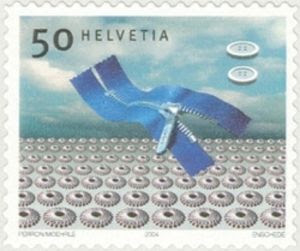
National Zipper Day (U.S.)


National Zipper Day is celebrated every year on April 29 to honour the invention of the zipper, a simple yet revolutionary fastening device.

The modern zipper was designed by Swedish-American engineer, Gideon Sundback, who patented it on April 29, 1913. Although earlier versions existed, Sundback’s design made the zipper reliable and practical, changing clothing, luggage, and fashion forever.

The name "zipper" was later popularized by the B.F. Goodrich Company because of the fun "zip" sound it made.

Before Sundback came up with his tool, there were many versions of this wondrous device, without which, being fashionable today may have just been a bit harder.

One of the first recorded versions of the zipper came in 1851 from Elias Howe - an American inventor who is often credited as a developer of the technology for sewing machines. In the late 19th century, Whitcomb Judson invented a clasp locker which made its debut at the Chicago World's Fair in 1893. This invention did not catch on as well as Judson had hoped for but it did earn him the title of the Inventor of the Zipper.


Monday, April 28, 2025

World Day for Safety and Health at Work


Every year, people mark World Day for Safety and Health at Work on April 28 to promote workplace safety and foster a healthy work environment in all sectors.

This day was initiated by the International Labour Organisation (ILO) in 2003, aiming to advocate for workplace safety standards and prioritizing employee well-being by bringing awareness about work-related casualties and ailments.

The world of work is rapidly evolving due to AI, technology, and digitalization; by addressing both the advantages and challenges it presents, the campaign will also explore how these factors are influencing and transforming labour trends, enabling the creation of safer and healthier workplaces for everyone on a global scale.

World Day for Safety and Health at Work is for everyone, not just office workers, including those who work in factories, farms, hospitals, schools, and construction sites.

It promotes communication between governments, employees, and other stakeholders to establish and implement occupational safety and health (OSH) rules and practices.

It emphasizes that everyone, regardless of where they work, has the right to a safe and healthy workplace, with the day serving as a reminder to promote workplace safety and the necessity of avoiding work-related illnesses or accidents.


Sunday, April 27, 2025

International Hyena Day


April 27th is International Hyena Day which advocates for changing the public's perspective on hyenas, and seeing their importance on Earth.

Hyenas don't have the greatest reputation due to centuries of bad publicity through literature and folklore. Spread through Africa and Asia, hyenas are intelligent mammals living in clans of 10 to 120 animals. They are skilled hunters, and not only scavengers which still makes them essential to prevent the spread of disease. They have highly acidic stomachs to break down their food, even though it isn't the freshest quality.

Their "demonic laugh" is often misunderstood, as it occurs when a lower-ranking animal is stressed. Hyenas are vulnerable to extinction because of habitat loss and persecution by farmers and poachers.

National Babe Ruth Day (U.S.)


On April 27, baseball fans worldwide honour one of baseball's all-time greatest players on National Babe Ruth Day.  

George Herman “Babe” Ruth, Jr., born on February 6, 1895, in Baltimore, Maryland, was nicknamed “the Bambino” and “the Sultan of Swat.” Spending 22 seasons in Major League Baseball (MLB), he played for three teams from 1914 to 1935.

Babe Ruth’s baseball career started as a pitcher for the Boston Red Sox. He became a full-time right-fielder when the New York Yankees bought his contract in 1919.  Being one of the league’s most prolific hitters, he helped the Yankees win seven pennants and four World Series titles.

Ruth set career records during his career for home runs, slugging percentage, runs batted in, and on-base plus slugging. In 1927, he was the very first player to hit 60 home runs in one season.

Following a short stint with the Boston Braves, Ruth retired in 1935.In 1936, the National Baseball Hall of Fame elected Ruth as one of the first five players to be inducted into the Hall.

In 1946, after experiencing severe eye pain and difficulty swallowing, Babe Ruth was diagnosed with cancer. A year later on April 27, Ruth attended the newly proclaimed Babe Ruth Day and spoke briefly to a crowd of almost 60,000 people at Yankee Stadium.

At the age of 53, on August 16, 1948, at 8:01 pm, Babe Ruth died in his sleep.


Togo Independence Day


Togo Independence Day, celebrated on April 27th each year, commemorates the country’s independence from French-administered UN trusteeship on April 27, 1960. This significant day marks the culmination of Togo’s struggle for self-governance and sovereignty, following years of colonial rule. The name Togo comes from the language spoken by the local tribes and which means “land where lagoons lie” today, Sylvanus Olympio became the first president during the first presidential elections in 1961.


Morse Code Day


Morse Code Day on April 27 honours the inventor of the Morse code, Samuel Morse, who was born on this day in 1791. Apart from this, Morse Code Day also celebrates this pioneering method of communication and the invention that was first used to transmit encoded messages — the electric telegraph. Morse code is a precise, concise form of communication that played a role in wars and influenced Western life in general when Morse invented it.

History of Morse Code Day

Before we enjoyed instant communication via cell phones and email, the world communicated with tranquility. Messages were sent via post and were hand-delivered to the recipients, often weeks or even months later. Then, people began to wonder if there was a faster means of communication. One such group of people, three Americans – the artist and inventor Samuel Morse, scientist and businessman Alfred Vail, and scientist Joseph Henry began devising a way to communicate using the electric telegraph in 1836. Morse initially came up with the idea — electric currents would pass through the telegraph as the person typed, leaving indentations on a paper tape. They couldn’t type complete words or messages, and so, substituted a code to represent the message. There were dots, dashes, and even spaces that represented different numerals from zero to nine.

Initially, this code only transmitted numerals. By 1940, Vail realized this method was limited and further expanded the code to include letters and special characteristics too. This code was initially dubbed the ‘Morse landline code,’ ‘American Morse code,’ or ‘Railroad Morse.’

Soon, the use of this system spread across the sea to Europe. People using the code reported one major challenge. The symbols that the Morse code represented were all in English, making the original Morse code inadequate for non-English countries that had letters with various diacritic marks like ë, ç, and more. A group of European nations took it upon themselves to create their variation of the Morse code which was released in 1851. Called the International Morse Code or the Continental Morse Code, this new version of the code gained widespread appeal and was used across shipping, aviation, and other industries globally.

International Geodiversity Day

  International Geodiversity Day is celebrated worldwide on October 6. Proclaimed by UNESCO in 2021 at its 41st General Conference, this an...