Wednesday, October 16, 2024

World Bread Day


Every year on October 16th, people around the world come together to celebrate World Bread Day, a special occasion dedicated to honouring one of the oldest and most beloved staples of human diet - bread. This date commemorates the anniversary of the creation of the Food and Agriculture Organization of the United Nations (FAO), a significant event in the history of food security and nutrition worldwide. World Bread Day is a time to reflect on the importance of bread in our lives, its cultural significance, and the vital role it plays in addressing global hunger and nutrition.

The History of World Bread Day

World Bread Day originated in 2002 when the International Union of Bakers and Bakers-Confectioners (UIBC) and the German Central Association of Bakeries initiated the event. These organizations wanted to create a global day that would highlight the importance of bread as a staple food and pay tribute to the skill and dedication of bakers worldwide. The choice of October 16th for this celebration was deliberate, as it marks the anniversary of the founding of the FAO, an agency that has played a pivotal role in addressing food security and nutrition challenges on a global scale.

The Significance of Bread

Bread is often referred to as the "staff of life," and for good reason. It has been a fundamental part of human nutrition for thousands of years, providing essential carbohydrates, fiber, and a range of vitamins and minerals. The history of breadmaking dates back to ancient civilizations like the Egyptians, who are credited with developing some of the earliest bread recipes. Since then, bread has evolved into countless varieties and styles, reflecting the diversity of cultures and cuisines around the world.

Beyond its nutritional value, bread holds immense cultural significance. It has been a symbol of sustenance, community, and hospitality in many societies. In various cultures, bread is often used to mark important life events, such as weddings, religious ceremonies, and festivals. The act of breaking bread together has the power to bring people closer, transcending language and cultural barriers.

Addressing Global Hunger and Nutrition

World Bread Day is also an opportunity to raise awareness about the global challenges of hunger and malnutrition. While bread is a symbol of nourishment and abundance in many parts of the world, millions of people still face food insecurity and nutritional deficiencies. The FAO, founded on the same date as World Bread Day, plays a crucial role in addressing these issues.

The FAO works tirelessly to improve food systems, promote sustainable agriculture, and ensure that nutritious food is accessible to all. Their efforts are aligned with the goals of World Bread Day, which seeks to emphasize the importance of bread not just as a culinary delight but as a symbol of hope and progress in the fight against hunger.

How to Celebrate World Bread Day

There are many ways to participate in World Bread Day and show your appreciation for this global staple:

Bake Your Own Bread: Try your hand at breadmaking by baking your own loaf of bread. There's something deeply satisfying about creating bread from scratch, and it allows you to experiment with flavours and ingredients.

Support Local Bakeries: Visit your local bakery and show your support for small businesses. Buying artisanal bread not only tastes delicious but also contributes to the preservation of traditional baking techniques.

Share Bread: Share a loaf of bread with your neighbours, friends, or coworkers. This act of generosity embodies the spirit of World Bread Day, fostering community and togetherness.

Donate to Hunger Relief Organizations: Consider making a donation to organizations that work to alleviate hunger and malnutrition, such as the FAO or local food banks.

Learn About Bread Cultures: Explore the rich diversity of bread cultures around the world by trying different types of bread from various countries and regions.

Educate Yourself: Take the time to learn about food security and nutrition issues in your community and globally. Awareness is the first step towards making a positive change.

World Food Day


World Food Day is celebrated on the 16th of October every year. This day is considered to be an international observance to raise awareness and take action to end hunger and malnutrition globally.

Objective and Significance

World Food Day was established by the United Nations Food and Agriculture Organization in 1979 to commemorate its founding in 1945. On this day, efforts are called regarding food security and sustainable agriculture on how to feed people all over the world in a healthy manner. It is also the day the world rallies together to overcome hunger and pursue ways to eat healthily and sustainably.

How to Get Involved

Individuals and organizations can join the celebration of World Food Day by:

Education in global food issues: Among them, find out more about global food issues, and food insecurity, as well as how to practice sustainable agricultural activity.

Supporting food banks: Donate non-perishable items or volunteer at your local food bank.

Advocating for policy changes: Work towards policies that have a face to change the status quo of hunger as well as sustainable farming practices.

Ensure minimal food waste: Develop projects ensuring the reduction of food waste from households up to communities.

Organization of food drives: Organize events to collect food for those who desperately need it.

Buy food that is produced locally and sustainably sourced, hence supporting local farmers.

Tuesday, October 15, 2024

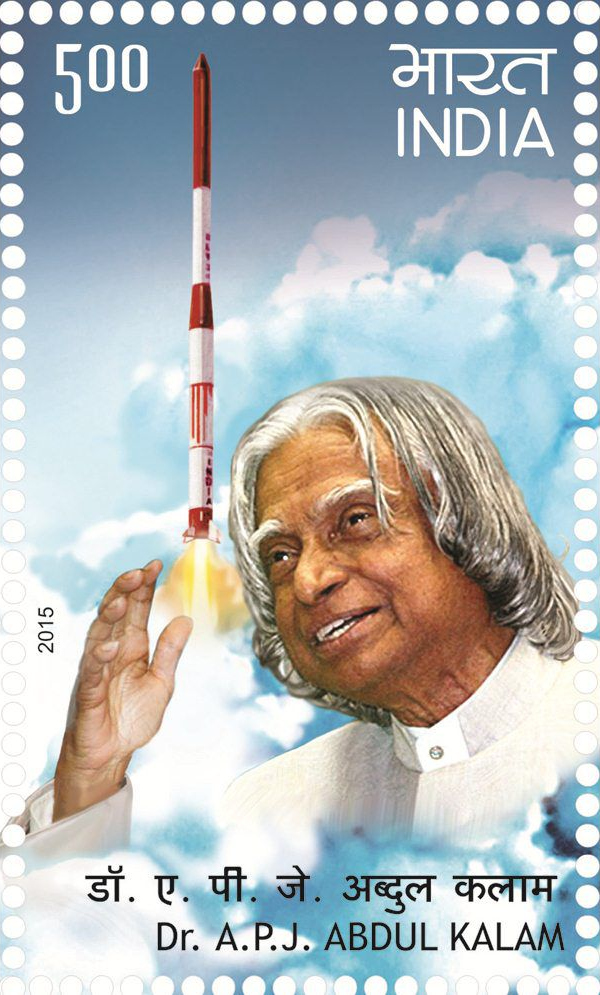
A.P.J. Abdul Kalam's Birth Anniversary


Avul Pakir Jainulabdeen Abdul Kalam, born on 15 October 1931, was an Indian aerospace scientist and statesman who served as the 11th president of India from 2002 to 2007. Born and raised in a Muslim family in Rameshwaram, Tamil Nadu, he studied physics and aerospace engineering. He spent the next four decades as a scientist and science administrator, mainly at the Defence Research and Development Organisation (DRDO) and Indian Space Research Organisation (ISRO) and was intimately involved in India's civilian space programme and military missile development efforts. He thus came to be known as the Missile Man of India for his work on the development of ballistic missile and launch vehicle technology. He also played a pivotal organisational, technical, and political role in India's Pokhran-II nuclear tests in 1998, the first since the original nuclear test by India in 1974.

Kalam was elected as the 11th president of India in 2002 with the support of both the ruling Bharatiya Janata Party and the then-opposition Indian National Congress. Widely referred to as the "People's President", he returned to his civilian life of education, writing and public service after a single term. He was a recipient of several prestigious awards, including the Bharat Ratna, India's highest civilian honour.

While delivering a lecture at the Indian Institute of Management Shillong, Kalam collapsed and died from an apparent cardiac arrest on 27 July 2015, aged 83. Thousands, including national-level dignitaries, attended the funeral ceremony held in his hometown of Rameswaram, where he was buried with full state honours.

Monday, October 14, 2024

World Standards Day


Every year, World Standards Day is marked on October 14. Individuals and organizations are commemorated for their participation in the production and implementation of international standards. This aims to emphasize the role that standardization plays in enhancing international trade and safety, as well as quality of life.

Background

The date it commemorates is the first meeting held in 1946, at which delegates from 25 countries met in London to establish an international organization that would concentrate its efforts on standardization. Although the International Organization for Standardization was constituted the following year, the first World Standards Day was only celebrated in 1970.

Purpose and Significance

World Standards Day is intended to make the public aware of standards' crucial role in the international marketplace. That is: safety, reliability, and quality in the products and services of nearly every sector, from health care to technology.

Sunday, October 13, 2024

Margaret Thatcher's Birth Anniversary

Margaret Thatcher, born on 13 October 1925, in Grantham, Lincolnshire, England, was a British Conservative Party politician and prime minister (1979–90), Europe’s first woman prime minister. The only British prime minister in the 20th century to win three consecutive terms and, at the time of her resignation, Britain’s longest continuously serving prime minister since 1827, she accelerated the evolution of the British economy from statism to liberalism and became, by personality as much as achievement, the most renowned British political leader since \Winston Churchill. She was a role model for a later prime minister, Liz Truss.

Sister Nivedita's Death Anniversary


Nivedita, who passed away on 13 October 1911, in Darjeeling [Darjiling], India, aged 43, was an Irish-born schoolteacher who was a follower of the Indian spiritual leader Vivekananda (Narendranath Datta) and became an influential spokesperson promoting Indian national consciousness, unity, and freedom.

The eldest child of Mary and Samuel Richmond Noble, Margaret became a teacher at the age of 17 and taught in different schools around Ireland and England before establishing her own school at Wimbledon in 1892. A good writer and speaker, she joined the Sesame Club in London, where she met fellow writers George Bernard Shaw and Thomas Huxley.

Noble met Vivekananda when he visited England in 1895, and she was attracted to the universal principles of Vedanta and to Vivekananda’s humanistic teachings. Accepting him as her guru (spiritual teacher) before he left England in 1896, she worked for the Vedanta movement in England until she went to India in 1898. Her great level of devotion compelled Vivekananda to give her the name Nivedita (“Dedicated One”). She went to India primarily to help Vivekananda realize his plans to educate women, and she opened a small school at Calcutta (now Kolkata) in Bengal, where she tried to blend Indian traditions with Western ideas. She closed the school in 1899 to raise funds abroad before returning in 1902 and reopening it. The following year she added courses to train young women in arts and crafts in addition to basic academic subjects.

Nivedita also made notable efforts to serve the poor of Calcutta and Bengal during times of plague, famine, and floods there. Following Vivekananda’s death in 1902, Nivedita turned her attention more toward India’s political emancipation. She objected strongly to the partition of Bengal in 1905 and, as part of her deep involvement in the revival of Indian art, supported the swadeshi (“our own country”) movement that called for the boycott of imported British goods in favour of domestically produced handmade goods. She continued to give lectures in India and overseas, promoting Indian arts and the education of Indian women.

Nivedita’s tireless activity, austere lifestyle, and disregard for her own welfare eventually caused her health to fail, and she died at the age of 44. During her close contact with the Indian people, they came to love their “sister” with devoted admiration bordering on veneration. The poet Rabindranath Tagore, one of her close friends, summed up that sentiment when, after her death, he referred to her as the “mother of the people.” Her school continued in operation in the early 21st century in present-day Kolkata under the management of the Ramakrishna Sarada Mission (a sister organization to the Ramakrishna Mission founded by Vivekananda in 1897).


Ashok Kumar's Birth Anniversary


Ashok Kumar (born Kumudlal Ganguly), on 13 October 1911, was an Indian actor who attained iconic status in Indian cinema. He was considered the first big star of Indian cinema as well as the first lead actor to play an anti-hero. He also became the first star to reinvent himself, enjoying a long and hugely successful career as a character actor. He was a member of the cinematic Ganguly family. He was honoured in 1988 with the Dadasaheb Phalke Award, the highest national award for cinema artists, by the Government of India. He received the Padma Shri in 1962 and Padma Bhushan in 1999 for his contributions to Indian cinema.

Ukraine Independence Day

  August 24 is the Independence Day of Ukraine,   marking the anniversary of the nation's declaration of independence from the Soviet Un...